- 4192 Devonwood Way, Ashburn, Virginia, 20148
- Helpline: +1 (703) 665-3747
Analyzing Spatio-Temporal Spread of Covid19 in India
- Home
- Back to Journal
- Article Details
Abstract
In this work, we analyzed the spatial and temporal spread of the COVID-19 cases in India at country and state scales for the time period 10th March to 10th June, 2020, when the spread is growing faster and the number of positive cases touched 250000 in India. The results clearly suggest the onset of COVID-19 in different part of India is happened by people with travel history from outside India and there is exponential growth of the cases in India during April-May 2020. The infection growth rate and the doubling rate of COVID-19 spread at various time period in the analysis for India and the states which severely affected are discussed. This study provides an insight to the propagation dynamics of COVID-19 in India and major states which can be a good input for the disease spread prediction model and for the decision making to containment the COVID-19 in India.
Keywords: COVID-19, Spatio-temporal, Spread, Growth rate, Doubling time, India
Introduction
The whole world is facing an ongoing global pandemic due to the corona virus disease (COVID-19) which spreads by the Severe acute respiratory syndrome corona virus 2 (SARS-CoV-2) from person to person [1–2] and it is a threat to the global environment. It is almost six months when first COVID-19 case reported in Wuhan in China and then WHO declared the global pandemic on 11th March 2020 (WHO, 2020). The disease outbreak resulted major harm and challenges to almost all the countries in world as the number of infection and the associated mortality is increasing rapidly and the transmission is high even with asymptomatic behavior in the patients [3–4]. The close contacts like family members, colleagues, friends etc. of patients are in high risk of the COVID-19 transmission [4]. A recent study reviewed the possible mode (i.e. droplets and aerosols) of spread of COVID-19 virus in the environment and among peoples [5]. Another study also emphasized that few hundreds of SARS-CoV-2 virus would be sufficient to spread the disease among susceptible hosts [6].
The first positive case of COVID-19 case in India reported in Thrissur, Kerala on 30th January 2020 and the patient has traveled from Wuhan and then gradually the number rises and crossed to 250,000 by beginning of June and spread across country within time span of 3 months. Government of India imposed four phases of country wise lockdown starting 24th March 2020 to containment the epidemic viral disease spread. As India is a very large country with different physio-geographical and environmental conditions so it is very difficult to estimate the COVID-19 spread at regional scale. Also the weather and climate is very diverse in India and in 2020 the winter prevailed in January-February with low temperatures, followed by intense summer (rise in daily temperatures even to more than 40–45oC in various parts) during March-May and witnessed rainfall due to the pre-monsoon thunderstorm in eastern, south peninsular and some parts of north and central India. Two tropical cyclones in Bay of Bengal and Arabian Sea in May 2020 resulted major disasters in the states like West Bengal, Maharashtra, parts of Odisha and Gujarat. Recently several researchers reported the relation of meteorological parameters and the dispersion potential of COVID-19 at multiple spatial scales like global, national and local scales [7–11]. So, in a country like India there is a need of analysis which adopts the multi-disciplinary approach integrating biophysical and human variables [12] for studying the epidemics like COVID-19. Few recent studies indicated the direct relation between environmental, topographic, socio-economic and demographic themes in the COVID-19 spreads [13–15]. Recently several works are being reported which deals with the study of the spread of the COVID-19 in various parts of world [16–24].
As the geographical situation deals with environmental, territorial and location specific perspective [25] so in this study the geographical distribution of the spread of COVID-19 in the large country i.e. India is analyzed to understand the spatial and temporal degree of transmission of the positive cases during March to June 2020.The geo-spatial and statistical analysis are being carried out in understanding the transmission trajectory and disease intensity in India which can be used as a good guidance for the interpretation of the COVID-19 spread, modeling and prediction of the transmission of disease both in space and time and finally the decision making to fight the COVID-19 in India.
Material and Methodology
The COVID-19 infection data over India is being collected from various sources like Ministry of Health and Family Welfare (MoHFW), Government of India (https://mohfw.gov.in) [26] and Worldometers (https://www.worldometers.info) [27] at daily scale for the analysis period 10 March to 10 June 2020.
The spatial spread analysis of COVID-19 in India is carried out using the geo-spatial mapping in GIS tools. The trajectory of spread is represented as an onset map where the 1st day of the cases confirmed/reported in each state and union territories are mapped. The spatial spread of COVID-19 (the number of total positive cases) are mapped at interval of 1 week starting 14th March to 6th June are prepared and presented. Similarly, for temporal analysis over India and six most affected states (i.e. Maharashtra, Gujarat, Rajasthan, Tamilnadu Uttar Pradesh and Delhi), the histogram of daily new cases observed is presented along with the cumulated total positive cases in logarithmic scale.
Different statistical algorithms are adopted to analyze the growth rate and doubling rate of the COVID-19 in India and at different state levels. The COVID-19 positive case growth rate over India and different states and Union territories are computed using the confirmed cases of present day and previous day. To calculate the growth rate of the COVID-19 positive cases reported in India and all states the method of exponential curve fitting has been used. For this the data of COVID-19 positive cases (at daily scale) are used and an exponential trend yt = abt is being fitted by the least square method to obtain the trend values as follow.
The exponential trend is yt = abt(1)
Where t =Time Period, yt = Total COVID-19 positive cases at time t (day), a = Initial value of the positive cases (i.e. at t=0) and b = Constant.
Then the logarithmic value of eqn (1) is computed as the COVID-19 spreads exponentially and the equation becomes
log yt = log a + t log b(2)
Let as assume Y= log yt, A= log a, B= log b
The linear trend Y= A + Bt between Y (cases) and t (day) is equivalent to the exponential trend yt = abt.
Then the principle of least square is used for estimating A and B which are given by
∑Y = nA + B∑t(3)
∑tY = A∑t + B∑t(4)
These equations (3 and 4) are solved for A and B and finally using these values in equation 2, the trend values i.e. a and b are estimated by taking the antilog values of A and B respectively. i.e. a=antilog (A) and b=antilog (B)
Then for computing the rate of Growth the following algorithm is being adopted
P(t) = Po*exprt(5)
Where P (t) = Total COVID-19 positive cases at time t (day), PO = Initial value of COVID-19 positive cases (t=0), Gr = Rate of growth and t = Time Period
Finally the doubling rate i.e. time taken to double the cases as compared to previous number of COVID-19 positive cases at all India and state level computed using the growth rate (Gr) as follow.
Doubling Rate (Dr) = ln(2) / Gr
Results and Discussion
Onset of COVID-19
The COVID-19 case was first reported from Kerala in India on 30 January 2020, the day WHO declared global health emergency and the patients have travelled from Wuhan city in China where the COVID-19 originated in late December 2019. In February no cases is reported in India but by March 15 it spreads to Delhi, Rajasthan, Tamilnadu, Telangana, Uttar Pradesh, Haryana, Jammu, Ladakh, Maharashtra, Punjab and Karnataka.
Figure 1 represents the date of origin of COVID-19 cases first in each state in India during January to April 2020. By March end Assam, Bihar, Chandigarh, Chhattisgarh, Goa, Himachal Pradesh, Madhya Pradesh, Manipur, Odisha, Puduchery, Uttarakhand, West Bengal and by April it covers all over India. This indicated the trajectory of COVID-19 spread was in south India followed by north, west, east and finally north-east part of country. It is also observed that almost in all state the first reported cases have travel history from outside India.
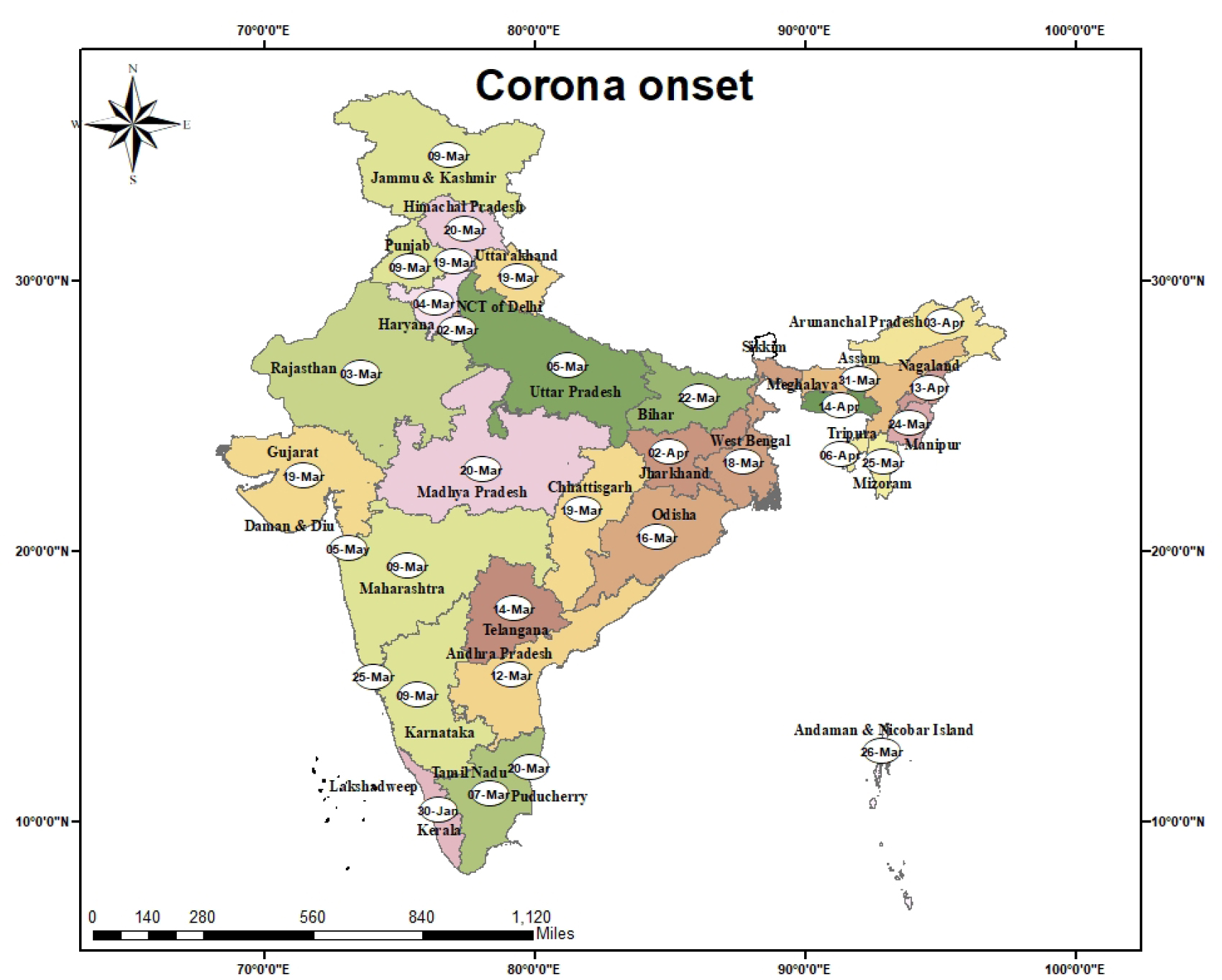
Figure 1: Date of onset (1st positive case reported) of COVID-19 in each state of India.
Spatial and Temporal distribution of COVID-19
The state wise distribution of the heat map of COVID-19 as of 6th June 2020 presented in figure 2a. The colors show the number of confirmed positive COVID-19 cases in each states in India. It is observed that the states like Maharashtra, Gujarat, Rajasthan, Tamilnadu and Delhi recorded maximum number of cases as compared to other states. Maharashtra state recorded highest numbers with 80229 followed by Tamilnadu with 28694 and Delhi with 26334 cases. In many other states the number found to be in the range 1000–10000cases except few states like Chhattisgarh, Himachal Pradesh, Jharkhand and all states in north east India (except Assam) where the number of cases are below 1000. The cumulative positive cases of COVID-19 in India is shown in figure 2b along with the daily new positive cases (secondary y-axis) reported for the period 10th March to 10th June 2020 (3 months) and the moving average (5day and 7day) of cumulative cases are also combined to compare the temporal variations in the COVID-19 spread in the country. This clearly indicates the progression of the disease become exponential in April and May 2020 over India. The 5-day average value is found to be 222 on 1st April rising to 1689 on 1st May and peaked to 7753 on 1st June supporting the exponential rise of the disease progression. The curves also show the growing situation in India and the flattening of curve is still long away as on 10th June 2020. The corresponding state wise spatial analysis at an interval of 1 week starting 28th March to 31st May 2020 are presented in figure 3a and 3b, which indicate the epidemic progressed rapidly and severely in the states of Maharastra, Tamilnadu, Delhi, Gujarat, Rajasthan, Uttar Pradesh describing the west and south part are more endemic during the three month analysis period. Keeping this in mind the state wise temporal progression of COVID-19 over these selected 6 states are estimated and presented in figure 4. The analysis shows in Maharashtra, Delhi and Tamilnadu the cases are rapidly growing stage with average daily new cases around 2500, 1000 and 1000 respectively in the early June 2020.
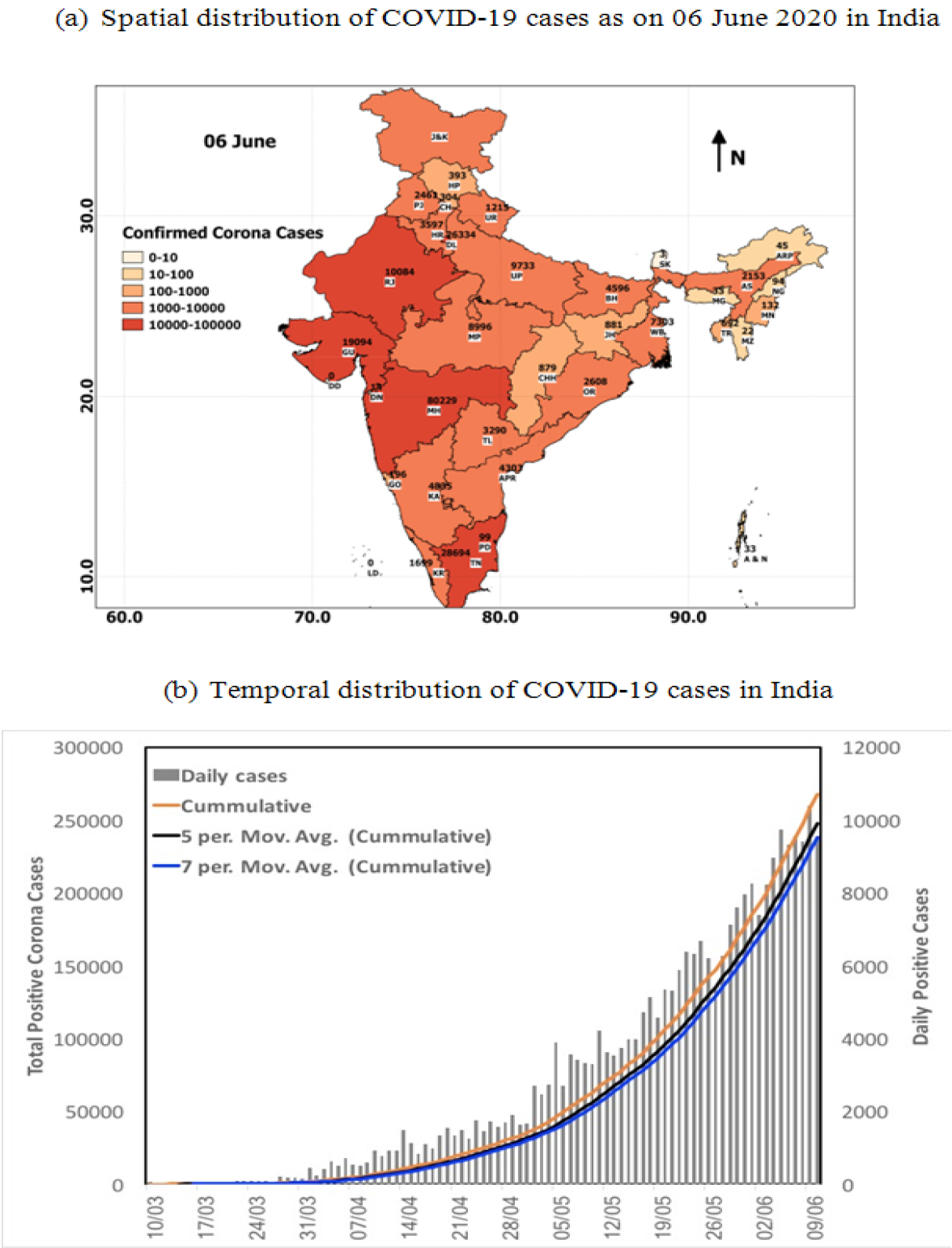
Figure 2: (a) Spatial and (b) Temporal distribution of COVID-19 cases in India.
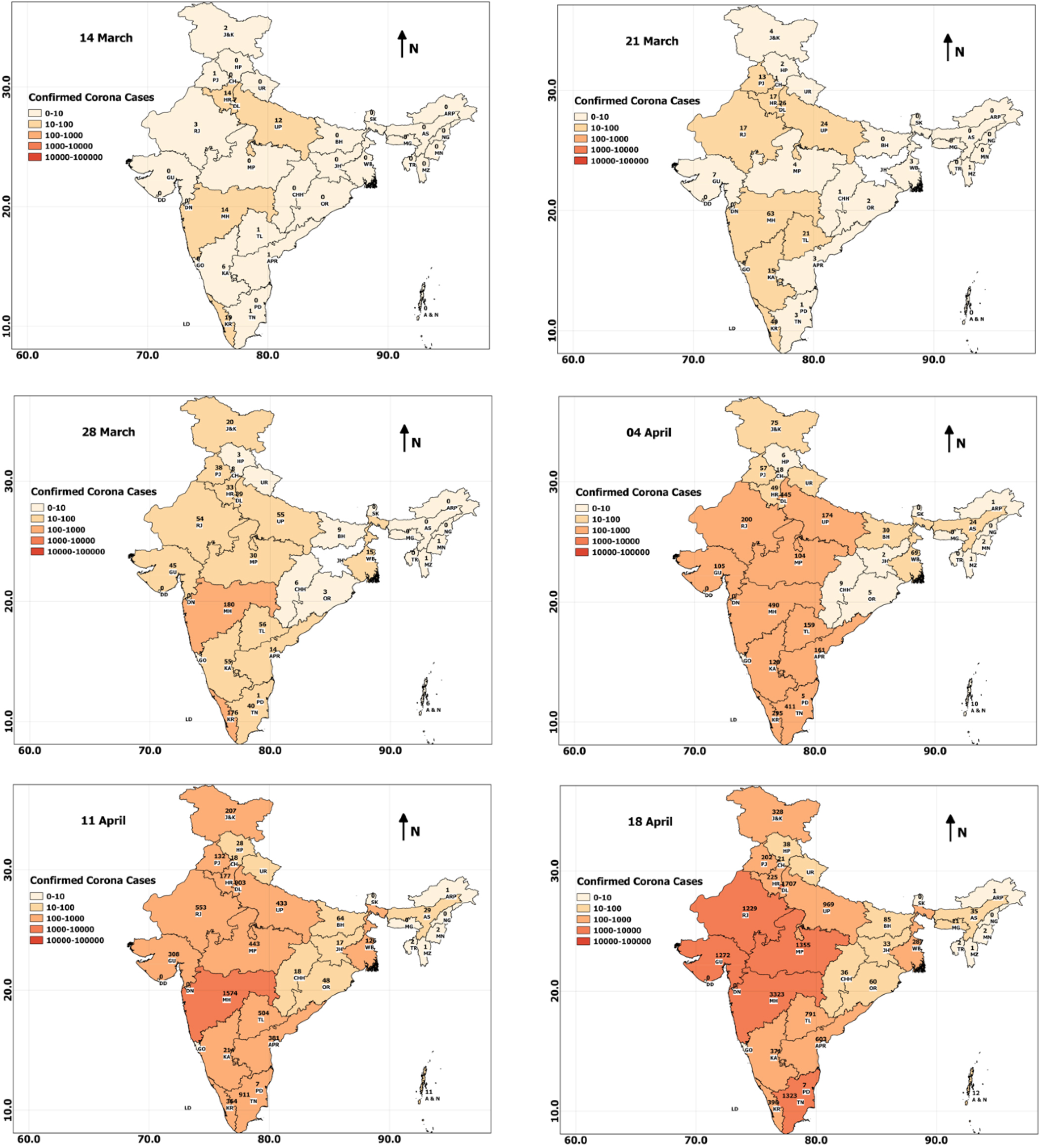
Figure 3(a): Spatial distribution of COVID-19 cases in India for weeks ending on 14th March to 18th April 2020.
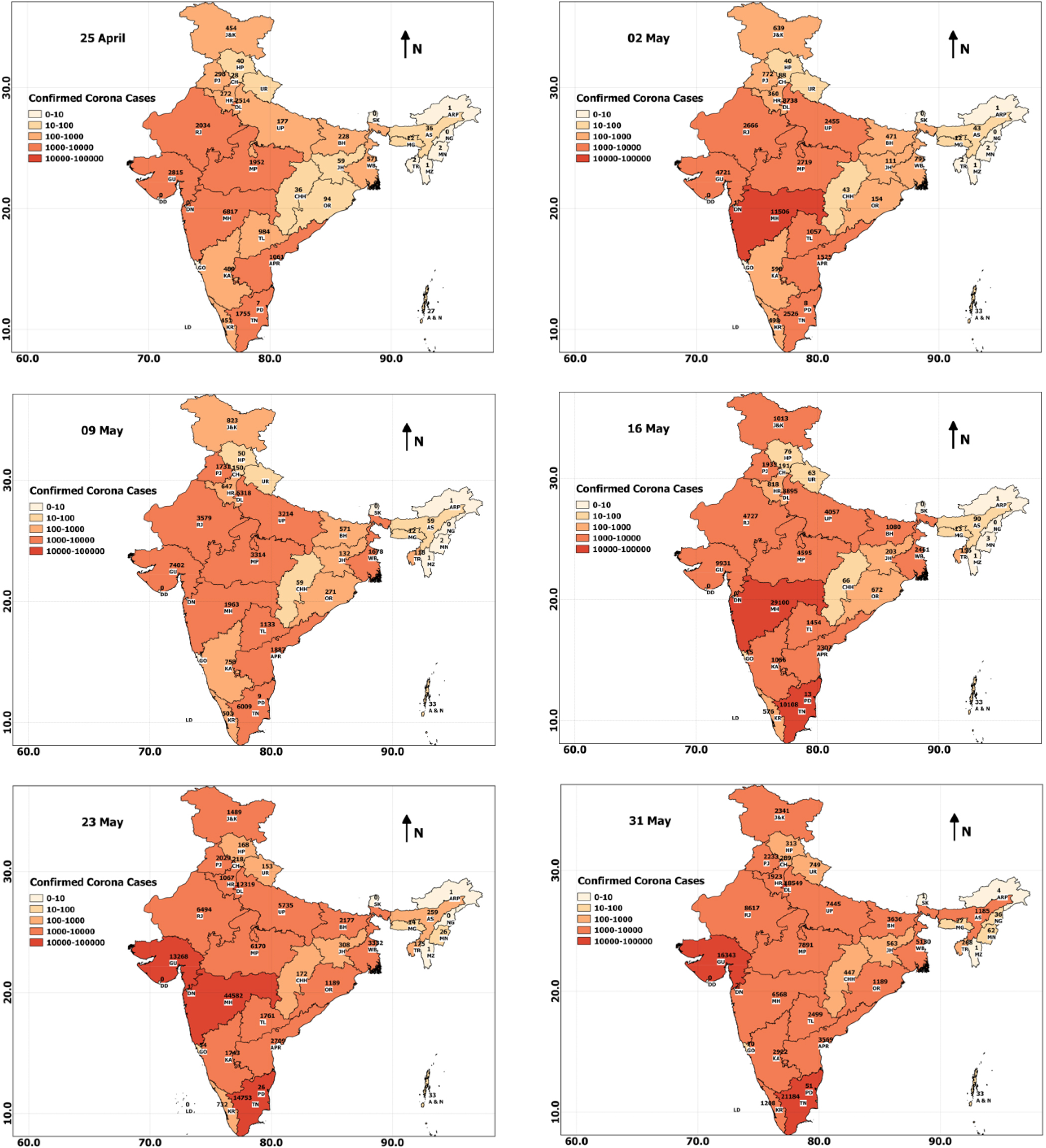
Figure 3(b): Spatial distribution of COVID-19 cases in India for weeks ending on 25th April to 31st May 2020.
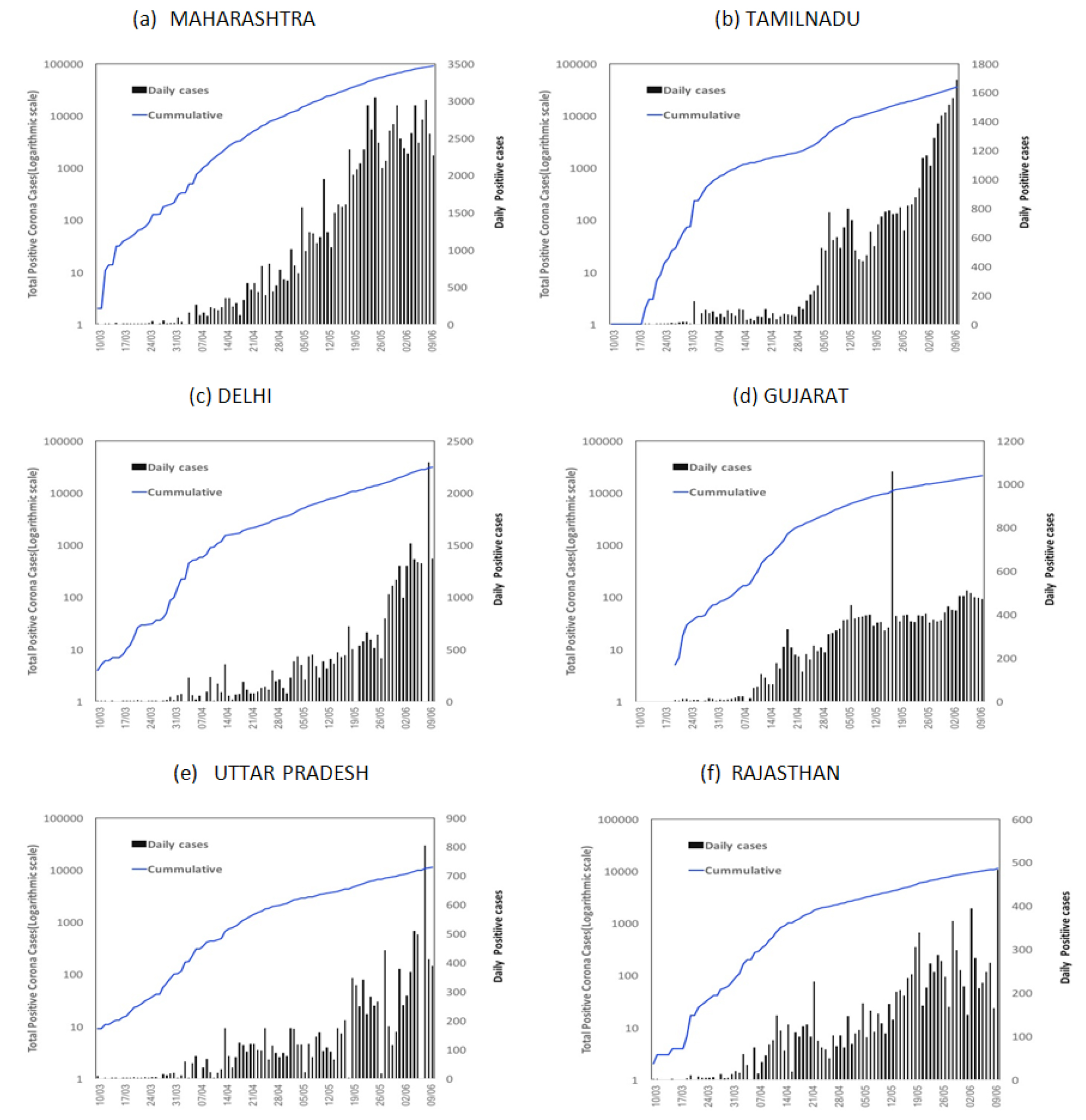
Figure 4: Temporal distribution of COVID-19 positive cases and daily new cases observed in six states of India.
As mentioned earlier the first case in India reported on 30th January and it took 60 days (29th March) to report the first 1000 cases, 99 days (7th May) to report 50,000 cases and 111days (19th May) to reach 100,000 cases. Similarly, it took 120 days (28th May), 126 days (3rd June), 132 days (9th June) to report 150000, 200000 and 250000 positive COVID-19 cases all over India. Figure 5 shows the number of days took to reach different numbers in the total COVID-19 cases in India and it is seen that the numbers from 30000 to 100000 is attained at an average of 3500 cases per day during the lockdown period, whereas in the later part in late May and early June the number spreads 100000 to 150000 in 9 days on an average of 5500 cases per day as in this period lot of interstate movement of people particularly migrant labors happened and the infected number increased from 150000 to 250000 very rapidly only in 12 days with an average rate of 8300 cases/day when the last phase of lockdown is lifted in India after May 31, 2020.
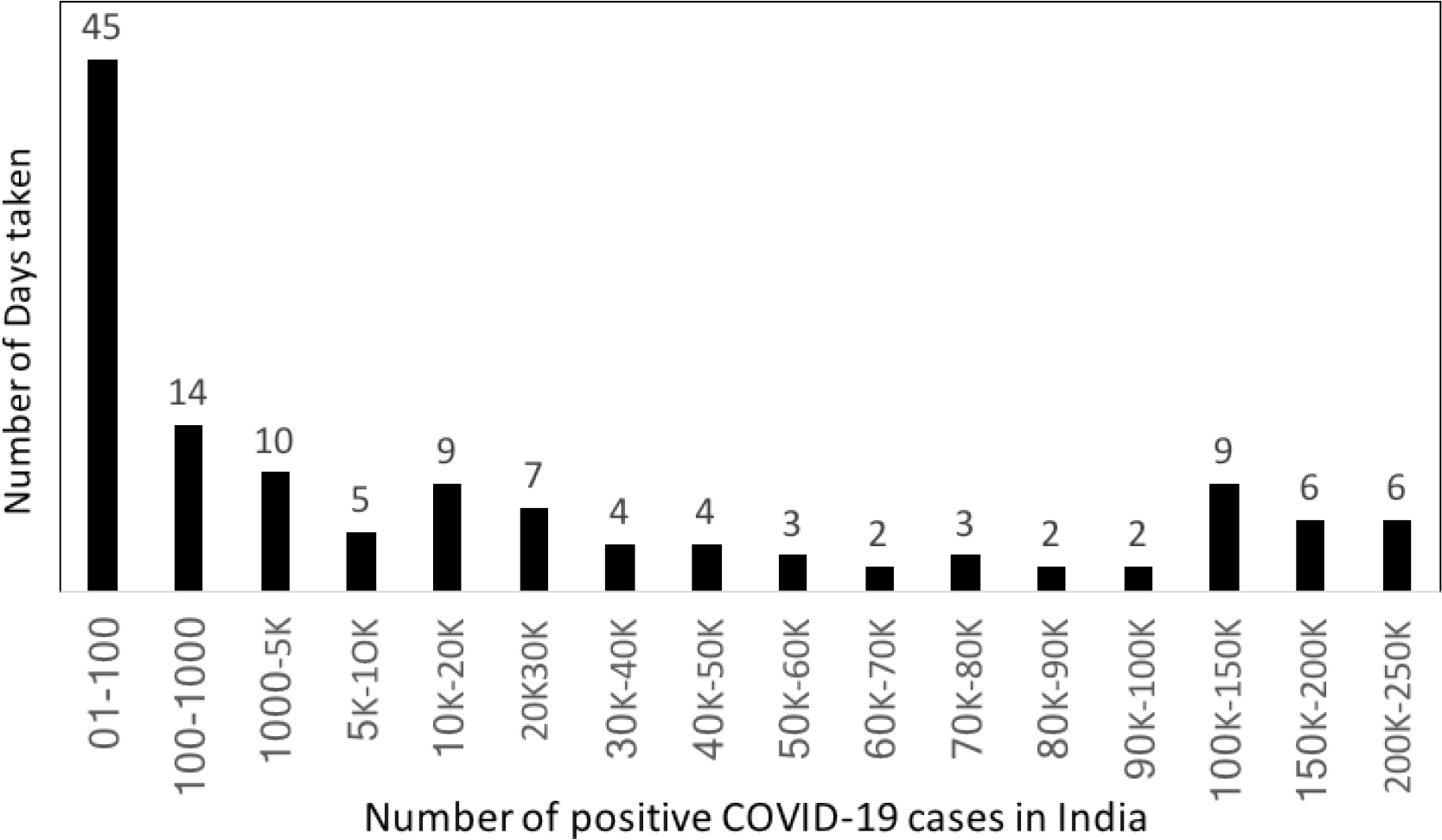
Figure 5: Number of days taken to reach at different total positive COVID-19 counts ranges in India.
Growth rate of COVID-19 in India
The exponential growth rate of the COVID-19 transmission across India and different state levels are computed for 5 time windows defined based on the cumulative number of total COVID-19 cases in India and presented in figure 6a. The 5 windows chosen are 10 March to 10 June (whole period), 10 March to 30 March (when cases reached 1000+), 1 April to 14 April (when cases reached 10000+), 15 April to 7 May (when cases reached 5000+) and 8 May to 3 June (when cases reached 200000+) at all India level. During whole analysis of 3 months period the exponential growth rate of COVID-19 at all India found to be 0.09 but for Maharashtra and Tamilnadu the value is 0.1 and 0.11 respectively. Same analysis in the early stage i.e. (10–31March) shows Tamilnadu and Gujarat has higher growth rate (0.22 and 0.25) followed by Maharashtra and Rajasthan (0.19) and at that time window all India growth rate is 0.16. In the 1–14April time period almost all the six states and all India witnessed similar growth rate (0.13 to 0.17) and it remained lower (0.05–0.09) in the next 3 weeks’ time (15 April to 7 May) and when the case number jumps to very high above 200000 in India the growth rate is found to be declining i.e. 0.05 at all India and about 0.03 to 0.05 in the individual states which affected severely also same declining trend observed in other states i.e. Punjab, Andhra Pradesh, Madhya Pradesh, Telangana etc. indicating significant decrease in the growth rate.
The doubling rate is a measure of the intensity of the spread of epidemic disease which generally provides the idea about the time period (in these case days) in which the cases of infected people became double as compared to the previous value. Figure 6b denotes the doubling rate of the COVID-19 in India and the most affected states. It is observed that in March the value was very low i.e. 4.31 for all India and about 2–4days for the states as the number of positive cases were reporting very small and it increases to 5.42 days during the first half (1 -14 April) of April 2020 for all India cases and also remained on an average 4.4 days for other states considered. During 15 Apr- 7 May when the numbers became very high the doubling rate also reduced to 10.42 days for India and more than 11 days for Tamilnadu, Delhi and Rajasthan but it was only close to 8 days over Maharashtra and Delhi which reported drastically increase in the positive COVID-19 cases in these two states. Similarly, in the last phase of lockdown (8 May-3 June) the doubling rate is about close to 14 days in India at the time when the number of cases already crossed 200,000 and the rate was about 12 days for most vulnerable states i.e. Maharashtra, Tamilnadu and 14 days for Delhi whereas it is very slow in Rajasthan (17.29 days) and Gujarat (19.81). This analysis clearly quantifies the doubling spread was not uniform across space and time and the metro cities like Mumbai, Chennai and Delhi are most affected cities where the cases are rising exponentially with doubling in low period as compared to the other cities and states.
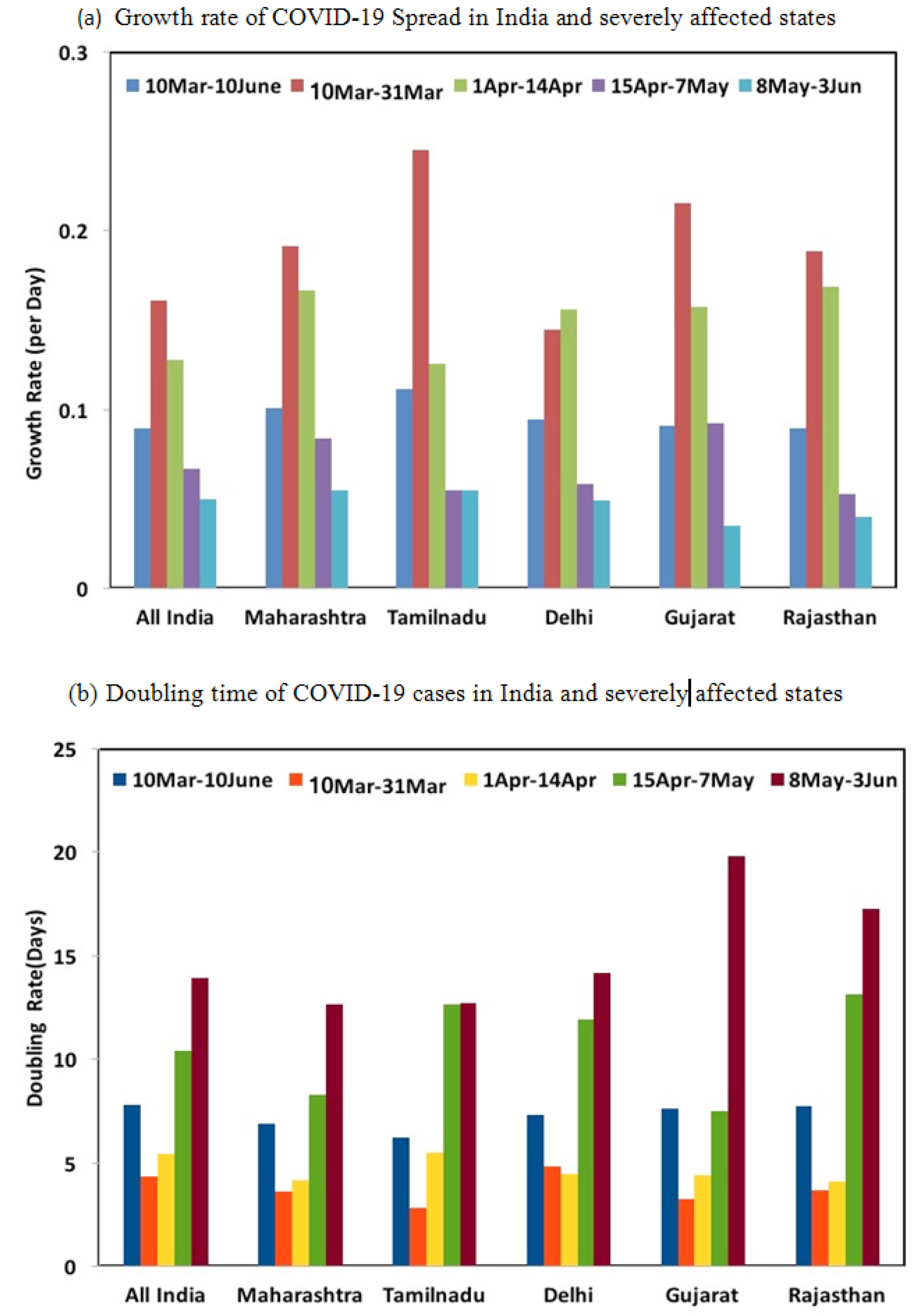
Figure 6: The (a) exponential growth rate and (b) doubling rate in days of COVID-19 spread in India and severely affected 5 states.
Conclusion
The global pandemic due to COVID-19 has been spreading world over and also it affected India and within 2 months’ time all the state in India reported the positive cases of COVID-19 patients. The spatial and temporal spread analysis reported here clearly indicates that the disease spread rapidly and the trajectory of COVID-19 spread In India is started in south India followed by north, west, east and finally north-east part of country and almost in all state the first reported cases have travel history from outside India. The analysis of the spatial spread at different stages i.e. early in March, intense summer season, multiple lockdown periods etc. is very important which can be used to understand the different social and population dynamics along with the environmental dynamics for the prevention of the rapid transmission of COVID-19 in a large country like India. The spread also results of the huge inter-state movements of the people like migrant labors which increases the cases in various states like Odisha, UP, Bihar, Jharkhand etc. This study provides the geographical mapping I n terms of the spatial as well as temporal analysis of the COVID-19 spreads in terms of the growth rate and doubling rate of the disease at each state level and the outcomes could be a valuable information and can be integrated with the more robust geo-spatial tools and statistical methods as well as predictive models (statistical/regression/artificial intelligence) in the appropriate policy and decision making by the governments for the social mobilization and the quick response from the community, This spatio-temporal spread of COVID-19 understanding provides huge information about the epidemic dynamics starting from early stage in India and it can also be useful for deciding the mitigation plans at multiple scales like regional, state and national.
Acknowledgment
This work is supported by the projects funded by the Department of Science and Technology under Epidemiology Data Analytics (EDA) of Interdisciplinary cyber physical systems (ICPS) programme (Grant number: DST/ICPS/EDA/2018) and DST-RFBR project (Grant number INT/RUS/RFBR/P-336 2019) Govt. of India and another project funded under National Mission on Himalayan Studies (NMHS) of Ministry of Environment, forest and climate change, Govt. of India (grant no: GBPNI/NMHS-2019–20/MG/315). The CSIR 4PI high-performance computing (HPC) facility used for computing is acknowledged gratefully. The authors acknowledge Head, CSIR 4PI for support and encouragement.
References
- Lewis D (2020) Is the coronavirus airborne? Experts can’t agree. Nature News. [View]
- Morawska L, Cao J (2020) airborne transmission of SARS-CoV-2: the world should face the reality. Environ Int 105730. [View]
- Bai Y, Yao L, Wei T, Tian F, Jin DY, et al. (2020) Presumed asymptomatic carrier transmission of COVID-19. JAMA 323: 406–1407. [View]
- Gao Z, Xu Y, Sun C, et al. (2020) A Systematic Review of Asymptomatic Infectionswith COVID-19. J Microbiol Immunol Infect In Press. [View]
- Jayaweera M, Perera H, Gunawardana B, Manatunge J (2020) Transmission of COVID-19 virus by droplets and aerosols: A critical review on the unresolved dichotomy. Environ Res 188: 109819. [View]
- Beggs CB (2020) Is there an airborne component to the transmission of COVID-19?: a quantitative analysis study. medRxiv Pre Print. [View]
- Bariotakis M, Sourvinos G, Castanas E, Pirintsos SA (2020) Climatic influences on the worldwide spread of SARS-CoV-2. MedRxiv Pre Print. [View]
- Ahmadi A, Fadai Y, Shirani M, Rahmani F (2020) Modeling and forecasting trend of COVID-19 epidemic in Iran until May 13, 2020. Medical Journal of The Islamic Republic of Iran (MJIRI) 34: 183–195. [View]
- Gupta S, Raghuwanshi GS, Chanda A (2020) Effect of weather on COVID-19 spread in the US: a prediction model for India in 2020. Sci Total Environ 728: 138860. [View]
- Bashir MF, Ma B, Komal B, Bashir MA, Tan D, Bashir M (2020) Correlation between climate indicators and COVID-19 pandemic in New York, USA. Sci Total Environ 728: 138835. [View]
- Tosepu R, Gunawan J, Effendy DS, Lestari H, Bahar H, Asfian P (2020) Correlation between weather and Covid-19 pandemic in Jakarta, Indonesia. Sci Total Environ 725: 138436. [View]
- Turner BL (2002) Contested identities: human-environment geography and disciplinary implications in a restructuring academy. Ann Assoc Am Geogr 92: 52–74. [View]
- Coccia M ( 2020) Factors determining the diffusion of COVID-19 and suggested strategy to prevent future accelerated viral infectivity similar to COVID. Sci Total Environ 138474. [View]
- Mollalo A, Vahedi B, Rivera KM (2020) GIS-based spatial modeling of COVID-19 incidence rate in the continental United States. Sci Total Environ 728: 138884. [View]
- Oto-Peralías D (2020) Regional Correlations of COVID-19 in Spain. OSF Preprints. [View]
- Guan WJ, Ni ZY, Hu Y, Liang WH, Ou CQ, He JX, Du B (2020) Clinical characteristics of coronavirus disease 2019 in China. New England Journal of Medicine 382: 1708–1720. [View]
- Huang H, Wang Y, Wang Z, Liang Z, Qu S, Ma S, Liu X (2020) Epidemic Features and Control of 2019 Novel Coronavirus Pneumonia in Wenzhou, China. SSRN China 3/3/2020. [View]
- Arab-Mazar Z, Sah R, Rabaan AA, Dhama K, Rodriguez-Morales AJ (2020)Mapping the incidence of the COVID-19 hotspot in Iran – implications for travelers. Travel Med Infect Dis [View]
- Giuliani D, Dickson MM, Espa G, Santi F (2020) Modelling and Predicting the Spatio-Temporal Spread of Coronavirus Disease 2019 (COVID-19) in Italy (3/20/2020). SSRN. [View]
- Rezaei M, Nouri AA, Park GS, Kim DH (2020) Application of geographic information system in monitoring and detecting the COVID-19 outbreak. Iran J Public Health 49: 114–116. [View]
- Dagnino R, Weber EJ, Panitz LM (2020) Monitoramento do Coronavírus (Covid-19) nos municípios do Rio Grande do Sul, Brasil. SocArXiv. [View]
- Desjardins MR, Hohl A, Delmelle EM (2020) Rapid surveillance of COVID-19 in the United States using a prospective space-time scan statistic: detecting and evaluating emerging clusters. Appl Geogr 118: 102202. [View]
- Silva RJ, Silva K, Mattos J (2020) Análise espacial sobre a dispersão da covid-19 no Estado da Bahia. [View]
- Santana MV (2020) Juárez COVID-19 en México: comportamiento espacio temporal y condicionantes socioespaciales, febrero y marzo de 2020. Posición 3: 2683–8915. [View]
- Pattison WD (1964) The four traditions of geography. J Geogr 63: 211–216. [View]
- https://mohfw.gov.in
- https://www.worldometers.info