- 4192 Devonwood Way, Ashburn, Virginia, 20148
- Helpline: +1 (703) 665-3747
Try fetal education on newborn life. Based on fetal hearing ability
- Home
- Back to Journal
- Article Details
Introduction
A HP 3311A function generator was prepared stimulating fetus at outside of mother including 250, 500 and 1,000 Hz sine wave tones, a power amplifier, a loud speaker and an audiometer to measure the sound intensity at 1 meter distance from the speaker. Intensity of sound was 80 dB in 28 weeks and 60 dB at 40 weeks of pregnancy. The difference of 1,000 Hz sound effect was significant between 28 and 40 weeks of pregnancy. Fetal reaction was fetal movements followed by transient fetal heart rate (FHR) increase (acceleration) in fetal resting state, which were recorded by Maeda’s actocardiogram (ACG), while the difference was insignificant if the sound frequency was 250 or 500 Hz. Thus, significant change was achieved when the sound frequency was 1,000 Hz, but not by 250 or 500 Hz sound in adult conversation. Light stimulation was tried by the flush light of photo strobo light at pregnant abdomen, where fetal response to light was fetal movement and FHR acceleration, which were noted after 24 weeks of pregnancy, thus, a fetus also responded to light after formation of retina [1, 2].
Fetal Education
According our experiments, fetal reaction was positive to 1,000Hz sound stimulation, thus, every fetal acoustic education will be done with 1,000 Hz sound, i.e., a fetus will be educated on postnatal life after birth through 1,000 Hz voice, thus, an examples of voice changer is illustrated in (Figure 1), which will effectively teach fetus postnatal life, with no newborn cry, namely, 4 newborns cried in a TV program. The author understood that the newborn did not know outside life, thus, a fetus should be educated on stressful out of uterus life before birth.
Microphone Amplifiers 1,000 Hz 0scillator Loud speaker
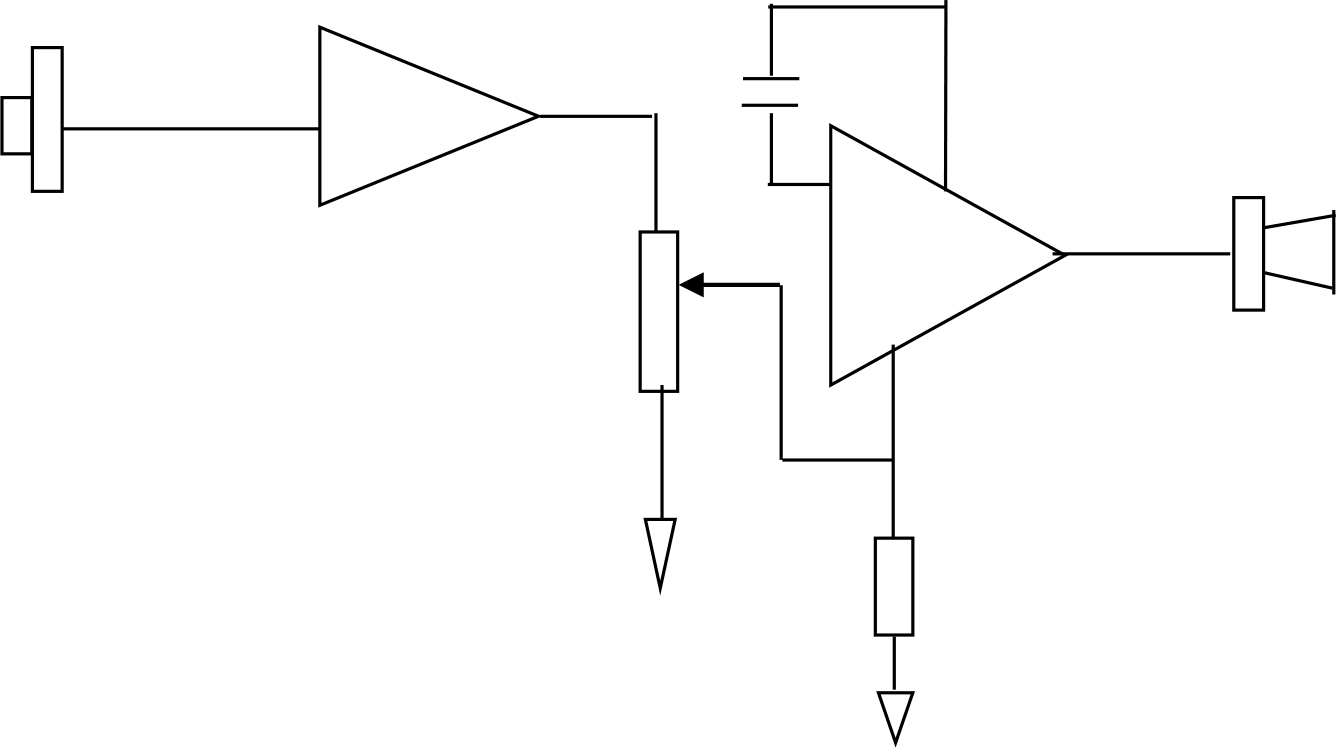
Figure 1: 400 to 1,000 Hz voice changer, which is necessary to speak to the fetus. The device is similar to high-pitched fetal heart sound listener, hand-made by Maeda in 1962.
Methods And Conclusion
As stated in fetal sound stimulation, 1,000 Hz sound was use full to communicate with the fetus during pregnancy, while adult conversation sounds, 250 or 500 Hz are ineffective to the fetus, namely, teachers voice will be changed to 1,000 Hz by using a voice changer. Fortunately, 60 Hz fetal heart sound was changed to 1,000 Hz to clearly listen to fetal heart tones to count fetal heart rate in fetal monitoring in 1962, by Maeda hand-made fetal heart monitor. As the fetus may speak with 1,000 Hz sound, a 1,000 to 500 Hz voice changer is needed for conversation.to the fetus, while teacher voice is changed to 1,000 Hz. As fetus may speak 1,000 Hz voice, another voice changer is needed, that is 1,000 to 500 Hz, then, fetal education is completed using two voice changers during pregnancy.
References